

One Evening Habit That Changes the Mood of the Whole Home
A single steady‚ simple evening habit gives the family an anchor at the end of the day‚ softens transitions and calms the whole home.
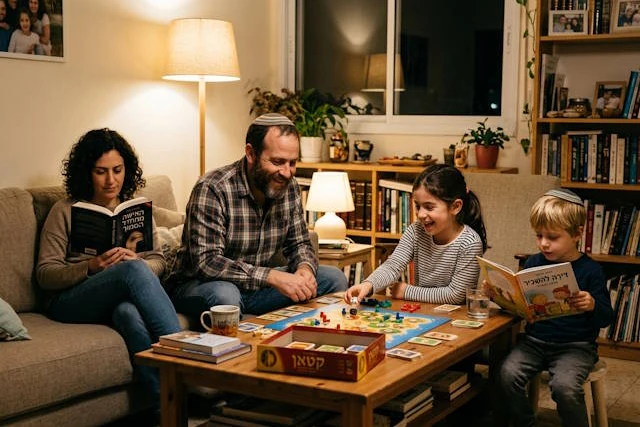
When an evening habit manages to fit into the routine instead of clashing with it‚ it starts to affect not only that particular moment but everything around it as well. If the home has a short time when the pace slows down‚ the tone softens and the time together takes on a familiar‚ repeated shape‚ the tension that builds up toward night starts to ease too. Family members know there is a point in the day when they not only finish tasks but also meet again as a household and not just as people carrying out chores. The habit does not have to be long or elaborate‚ but it does need to be clear enough for everyone to feel it. That way‚ a more stable‚ calmer and more pleasant atmosphere builds over time.
A Steady Evening Routine Creates Security
People‚ and children in particular‚ respond well to fixed structures that repeat and give a sense of knowing what comes next and of a familiar framework. When every evening feels like an unpredictable stream of instructions‚ screens‚ tiredness‚ anger and rushed preparations‚ tension builds at home that is very hard to reduce with good intentions alone. When there is one habit that clearly repeats every evening‚ however‚ the home gains a simple‚ stable emotional anchor. Knowing that this moment is coming helps everyone gather‚ slow down and feel that there is order in the way the day ends. That way‚ consistency itself becomes a source of calm.
Shared Presence Softens the Tone
One of the things that most affects the atmosphere at home is not exactly what you do together in the evening but what your shared presence looks like at that time. When the evening habit creates minutes in which family members are not just next to each other but also a little bit with each other‚ the tone of the whole home really changes. Voices become less sharp‚ reactions less hasty and the shifts between tasks feel less stressful. Even if it is a very simple activity‚ the fact that everyone stops together for a moment changes the emotional rhythm of the home. That way‚ a sense of togetherness forms that takes no great effort.
A Transition Window Signals the Day Is Changing
Family evenings tend to be especially hard when there is no moment marking a clear shift from the active day to its end. People come home from school‚ work‚ screens and tasks straight into a new situation without body or mind having time to register that the pace should change. A single evening habit‚ when it happens at roughly the same time‚ works like a transition window telling everyone the day has entered a different stage. This transition is very important because it gives the body and emotions a chance to adjust instead of just being dragged from one state to another. That way‚ the habit creates softness instead of sharpness.
Timing Shapes the Quality of Conversation
Family conversations do not happen in a vacuum‚ and they are strongly affected by when they take place and by the inner state of the people involved. When everything important is said right in moments of pressure‚ while getting ready for bed or amid accumulated fatigue‚ even good intentions can quickly turn into small clashes. An orderly evening habit‚ by contrast‚ lets certain conversations take place at a calmer time‚ when everyone is a little more available to listen. These are not necessarily deep or heavy conversations but an atmosphere in which it is easier to talk without an instant clash. That way‚ timing itself shapes the quality of the time together.
Simple Coordination Cuts Needless Tension
When there is a clear evening habit‚ tension around small questions gradually eases‚ because there is less uncertainty and less need to improvise every time. If family members know what happens at the end of the day‚ even partly‚ they do not have to renegotiate every little detail each evening. That kind of coordination reduces clashes over screens‚ showers‚ meals‚ chores or bedtime‚ not because it solves everything but because it shrinks the gray areas. When less energy is wasted on confusion‚ more energy is left for the time together. That way‚ the home feels calmer.
A Repeated Gesture Builds Reliable Closeness
Family closeness is not built mainly through dramatic moments but through small gestures that repeat and create a sense of emotional reliability. When the evening habit includes some gesture of coming together‚ even a very short one‚ it starts to tell family members that they matter to each other even when the day has been busy‚ exhausting or frustrating. The power of the habit lies not only in the moment itself but in the message it builds up over time. That message says that despite the pressure‚ the home has a fixed place where everyone meets again. That way‚ closeness grows from consistency rather than a one-time effort.
A Calm Routine Strengthens the Feeling of Home
Homes do not feel safe and pleasant only because of their decor‚ tidiness or rooms‚ but mainly because of the emotional atmosphere that develops in them again and again over time. When there is one evening habit that calms the pace and brings family members back to each other‚ the basic feeling of the home changes as well. The home becomes less a place where people just carry out tasks and more a place where they end the day together. The change is subtle but very deep‚ because it affects how each member of the household experiences the shared space. That way‚ the habit changes not only the evening but the feeling of the whole home.
In Summary
A single evening habit‚ when it is steady‚ simple and suited to the family's pace‚ can make a real difference to the atmosphere of the whole home. It creates continuity‚ softens transitions‚ improves the tone‚ reduces tension and gives family members a sense of a shared anchor at the end of the day. A big change is not always needed for the home to feel different. Sometimes it is precisely a small action‚ repeated consistently‚ that gradually changes the whole family feeling.