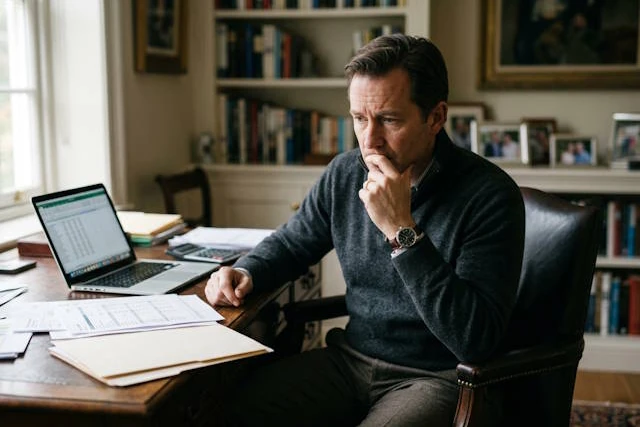

A filmed interview without rehearsed answers: balancing preparation and listening
How to prepare for a filmed interview so your answers sound natural: the purpose‚ key points‚ real listening and the filming conditions.
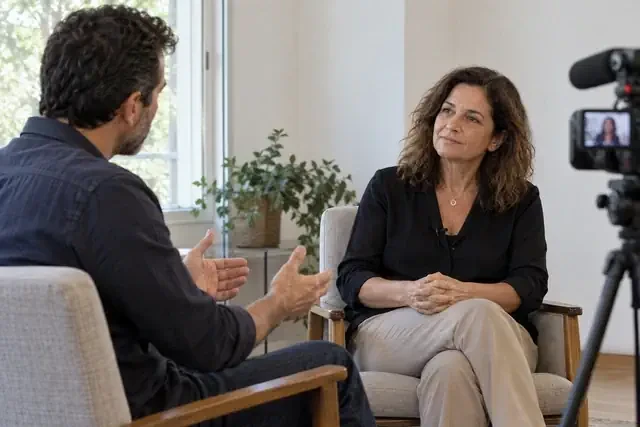
Preparing for a shoot can also include the way you respond within a conversation. Listening to the end of the question‚ pausing briefly before answering and distinguishing between the main idea and the background details give the interviewee more options in real time. Practicing acting in front of a camera can help identify when an answer relies on understanding the question and when it is pulled from a prepared text. You can start with a short conversation with another person on a familiar subject‚ and then check the connection between each question and the answer it received. What you learn from watching makes it possible to prepare more precisely: to strengthen a point that needs explanation‚ to choose a suitable example and to leave room for questions the preparation did not anticipate.
Understanding the Purpose of the Interview and the Audience
Before choosing the content‚ it is important to understand what the interview is supposed to give the viewer. A conversation that introduces a professional to a new audience is different from one that explains a process the audience already knows. Where it will be published and the length of the clip also affect how much detail is possible. A short check with the interviewer can clarify which topics are planned‚ how much time is set aside for the conversation and what knowledge can be assumed on the audience's part. From this information‚ you can choose words and examples that will be understood without prior familiarity with all the background. If short clips are expected to be cut from a long interview‚ it is worth making sure the answers include enough context to stand on their own‚ while still responding to the original question. The purpose of this check is to understand the framework of the conversation‚ not to try to control every question in advance. Knowing the audience also helps you spot a term that needs explaining and a place where an everyday example will be more useful than a long professional description that viewers would struggle to connect to their own reality. You can also find out whether the interviewer expects a continuous explanation or a conversation in which they stop and ask follow-up questions. The difference affects how you should prepare examples and how much background to put into each answer. Coordination like this leaves less room for surprises about the structure of the session‚ without fixing in advance the content of every moment in it.
Key Points Instead of a Fixed Script
You can prepare with a few points that are important to get across‚ attaching an example or a short explanation to each one. This structure gives flexibility‚ because the same point can come up in answers to different questions. Memorizing a whole paragraph sometimes ties the idea to a particular word order; when the flow is interrupted‚ it is harder to get back to it. Preparing by content makes it possible to recognize what has already been said‚ what is still missing and what does not fit the current question at all. For example‚ a business owner talking about a change in her service can prepare an explanation of the need‚ a case that illustrates it and a description of the new way of working. During the interview she will choose the part the question invites‚ instead of putting all three into every answer. You can also practice several phrasings of the same idea‚ to check that the meaning stays clear when the words change. That way the knowledge becomes available for the conversation‚ and the conversation can develop without the interviewee having to remember exactly where they stopped in a speech planned in advance. A short prep sheet can contain a keyword next to each idea and one example that supports it. There is no need to read from it during the conversation; it helps you remember the connections before the shoot. If a point does not find a natural place in the interview‚ you can check at the end whether it is needed‚ instead of putting it into an answer that did not ask for it.
The Question You Hear and the Intent Behind It
Listening in an interview includes identifying exactly what was asked for: a fact‚ an example‚ an explanation of a decision or a response to an experience. The same words can lead to different answers depending on the context in which they were asked. When the interviewee starts thinking about their wording before the question is finished‚ they may miss a detail that changes the request. A short pause at the end of the question makes it possible to choose an answer that fits it and to keep a comfortable pace. If the question is broad or vague‚ you can ask for a short clarification about which part interests the interviewer. There is no need to fill every silence immediately; a moment of thought can be a natural part of the conversation. Listening to earlier questions also helps‚ because the interviewer may come back to a detail that has already come up and expand on it. An interviewee who picks up on this connection gives the conversation continuity‚ whereas an automatic return to a prepared answer may make the viewer feel that the question was asked in one place and the answer delivered from another.
Examples with a Clear Sequence of Details
A practical example can turn a broad explanation into something that can be understood and remembered. It is worth choosing a case that has a clear situation‚ an action that was taken and a difference that resulted from it‚ without loading it with details that play no role in the conversation. An interviewee describing a change in the way service is provided can describe a request that kept coming up among customers and how it was handled‚ instead of settling for general words about improvement. It is important to stay accurate even when the story gets shorter: a single example does not necessarily represent every situation‚ and a partial memory is no reason to fill in a detail that is not known. If the interviewer asks for more‚ you can add information from the same case or move to another example whose connection to the question is clear. A sequence like this lets the viewer move from the principle to reality. It also makes things easier for the interviewee‚ because the story rests on something they know rather than on a list of qualities they have to try to prove. A small‚ relevant detail can give an example more clarity than a long story containing several competing conclusions.
An Answer with a Clear Beginning and End
A useful answer starts with the part that answers the question‚ and then adds the explanation needed to understand it. This order helps the viewer identify the main point and allows the interviewer to choose whether to go deeper into it. When an answer opens with a long background‚ the listener may struggle to understand where it is heading. The ending matters too: a sentence that closes the idea gives the conversation room to breathe and the next question room to appear. A pattern in which every answer goes on until the interviewer stops it can hurt the pace and reduce the chance to listen. You can practice a short answer and then an expanded version of the same idea‚ to check what is essential and what fits only if there is time and interest. The length does not have to be the same every time; a question about a specific detail can get a short answer‚ while a question about a process may need more space. What counts is whether the content moves forward within a clear boundary‚ and whether the viewer can tell that the question has been answered before the conversation moves on. Watching a practice session can focus on the moment when the idea has already been understood. If several repetitions of the same point come after that moment‚ you can practice finishing earlier. This review makes it possible to save the elaboration for information that adds meaning‚ and to give the interviewer the chance to choose what interests them next.
Filming Conditions That Allow a Comfortable Conversation
A short look at the filming environment reduces the need to deal with it while answering. You can find out where the interviewer will be‚ in which direction eye contact will go and how your voice sounds on the recording. In an interview where two people are talking‚ looking at the other person may suit the format better than trying to address the lens in every sentence‚ depending on the structure chosen for the shoot. A seated position that allows natural breathing and hand movements helps keep the conversation going even after several minutes. It is worth checking in advance for background noise or movement that distracts attention‚ and solving a practical problem before recording as far as possible. During the conversation‚ a technical glitch can be met with a stop and a fix rather than continuing to talk without knowing whether you can be heard. A drink of water and a break between segments can also fit into the filming framework. Paying attention to these conditions lets you devote more attention to the question and the answer‚ instead of keeping track at the same time of the microphone‚ the angle and the worry that something in the shot is not going as planned.
Flexibility When a Question Takes You by Surprise
A question you did not prepare for does not require an immediate answer at any cost. You can distinguish between something you know well‚ something that needs checking and something that lies outside the subject the interviewee can speak about accurately. An answer that acknowledges this limit preserves the credibility of the conversation. If the question is based on an assumption different from the one the interviewee knows‚ you can clarify the difference before answering. It is important to listen to the tone and the context in which the question comes up‚ but not to attribute an intention to the interviewer without basis. Sometimes a surprising question is an opportunity to give an explanation the audience really needs‚ even if it was not part of the original plan. After the interview you can come back to it and check what information was missing and what can be prepared for next time. The point of this review is not to build another rigid answer‚ but to broaden the base of knowledge and examples available to you. That way future preparation rests on a conversation that really took place‚ and the ability to respond stays open to new directions as well. Sometimes you can answer the familiar part of the question and point out which part needs checking. This separation keeps the content useful even when there is no full answer. It allows the interviewer to decide whether to move ahead with the topic‚ rephrase the question or come back to it later‚ without leaving the viewer with false confidence in a detail that has not been checked.
In Summary
A useful filmed interview is built on understanding the purpose of the conversation‚ preparing key points and listening to the question that is actually asked. Accurate examples‚ answers with clear boundaries and comfortable filming conditions let the content come across without relying on full memorization. Flexibility leaves room for further questions and for acknowledging something that needs checking. When preparation provides the knowledge and listening guides what to choose from it‚ the interviewee can take part in the conversation instead of trying again and again to steer it back to the script they planned. The result is a flow the viewer can follow‚ in which every answer is connected to the person opposite and to the subject the two of them are discussing.